Digging Through the Archive: Your Old Portfolio Is a Mood Ring You Can't Take Off
Every illustrator has one. Not a sketchbook, not a portfolio — a folder. Buried in a hard drive named "ART_FINALS_v2_ACTUAL_FINAL," sitting between tax documents and a screenshot of a Wi-Fi password from a coffee shop that closed in 2019. This folder is the archive. And opening it is less like reviewing your work and more like reading your middle school diary out loud at a family reunion.
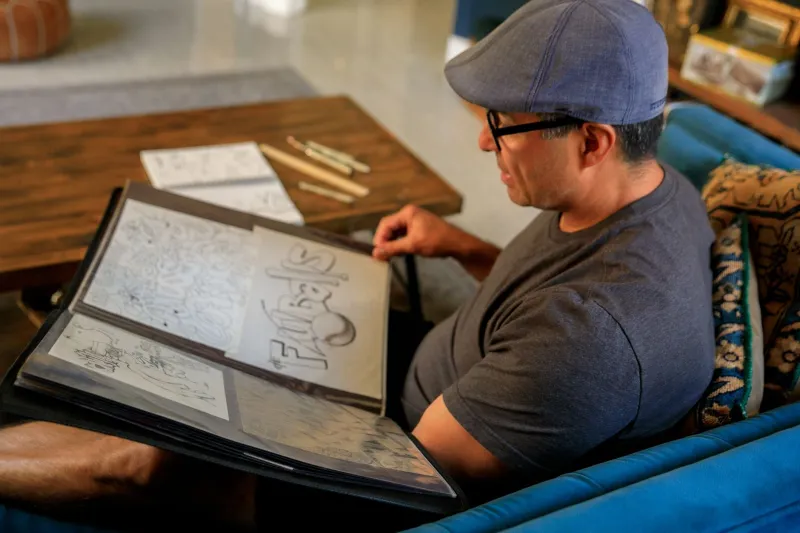
We asked a handful of working illustrators to crack theirs open and walk us through the wreckage. What we found wasn't embarrassment, exactly. It was archaeology.
The Strata of a Career
Ask any artist to describe their archive and they'll describe geological layers without realizing it. There's the bottom layer: fan art so earnest it should require a permission slip. One artist we spoke with — who asked to be identified only as "a professional adult" — surfaced a complete series of portraits of a certain animated sponge, drawn in colored pencil during a high school civics class that clearly wasn't working out.
Above that sits the "finding my style" era: a chaotic twelve months of trying on aesthetics like outfits. Heavy black ink one month. Pastel watercolor the next. A brief, unexplainable flirtation with drawing everyone as if they were made of stained glass.
And near the top, the half-finished personal project. Every archive has one. A comic that made it three pages. A picture book dummy that stalled at the storyboarding stage. An illustrated map of a fantasy world with two cities named and the rest just... vibes.
The Cringe Is the Curriculum
Here's the twist nobody tells you in art school: the work you can't look at is the work that taught you the most. That sponge portrait? It taught observation. The stained-glass phase? It taught color relationships, even if the relationship ended badly. The abandoned comic? It taught you that finishing things is a separate skill from starting them — a lesson some of us are still auditing.
An art director once told me she can date an illustrator's career the way you date a tree, by the rings. The wobbly anatomy isn't a failure. It's a growth record. The only truly bad sign in an old portfolio is sameness — an archive where the earliest piece looks identical to the newest one usually means the artist stopped taking risks somewhere along the way.
How to Curate the Time Capsule (Without Burying It Alive)
So what do you actually do with the archive? You have three options, and all of them are valid:
1. The Museum Approach. Keep a few pieces from each era, labeled like exhibits. "Early Work, 2013: The Artist Was Still Learning That Hands Are Not Mittens." This is for the sentimental. It's also secretly great interview material — clients love a before-and-after.
2. The Witness Protection Approach. Rename the folder something boring, move it to an external drive, and let it live in a drawer. No deletion, no viewing. The archive exists; you simply agree not to perceive it.
3. The Retirement Ceremony. Every few years, actually look at the oldest layer, thank it for its service, and archive it to cold storage. Not out of shame — out of gratitude. That work got you here.
What you shouldn't do is scrub every trace of your early work in a panic. Future you, ten years from now, will want something to cringe at. Cringe is just nostalgia with the volume turned up.
Open the Folder. We'll Wait.
Go ahead. Find it. The folder with the filename you chose at 2 a.m. Open it, scroll for ninety seconds, and notice how you feel. A little embarrassed, sure. But also a little proud — because every wobbly line in there was drawn by someone stubborn enough to keep going.
That's not a graveyard. That's a résumé.