The Guy Holding a Sandwich in Every Crowd Scene: A Love Letter to Background Details
Every crowd scene in animation and comics has one. You know the one. A slightly hunched figure in the back, holding a sandwich with the solemnity of a man who has known true loss. Nobody asked for him. Nobody scheduled him. Some artist, at 11 p.m., drew him in because the scene felt empty and the sandwich felt right.
This article is for him. And for the crooked lamppost, the novelty license plate, the poster on a fictional wall advertising a fictional yard sale. The background details nobody was paid to notice — but everybody was paid to draw.
The One-Viewer Theory
Ask any working illustrator and they'll tell you about the One-Viewer Theory: the unspoken belief that somewhere out there, a single person will pause the frame, zoom in, and find the thing you hid. That's who it's for. Not the art director. Not the client. The one person on Reddit who posts "ANYONE ELSE SEE THIS??" with a cropped screenshot at 2 a.m.
It sounds inefficient. It is wildly inefficient. It's also the entire emotional backbone of fan culture. Half of modern fandom exists because some background artist in the 1990s couldn't resist putting a tiny detail where it didn't belong, and a generation of viewers built a personality around finding it.
What Art Directors Actually Know
Here's the industry secret nobody puts in the job posting: art directors don't just tolerate background flourishes — they quietly depend on them. A scene with hidden details rewards rewatching. Rewatching builds attachment. Attachment builds a franchise. Nobody's writing that in a memo, but every seasoned AD has greenlit a "weird little guy" because they sensed the scene needed a soul, not more foreground.
The best background details also do quiet worldbuilding. A diner menu that lists foods specific to the story's setting. A child's crayon drawing taped to a spaceship wall. A "NO DIVING" sign next to a fountain that absolutely nobody was going to dive into. These cost the production nothing and tell the audience, without a single line of dialogue, that this world existed before the story started and will keep going after the credits roll.
A Tribute: The Blink-and-You'll-Miss-It Hall of Fame
In no particular order, a partial honor roll of legendary background gags and details:
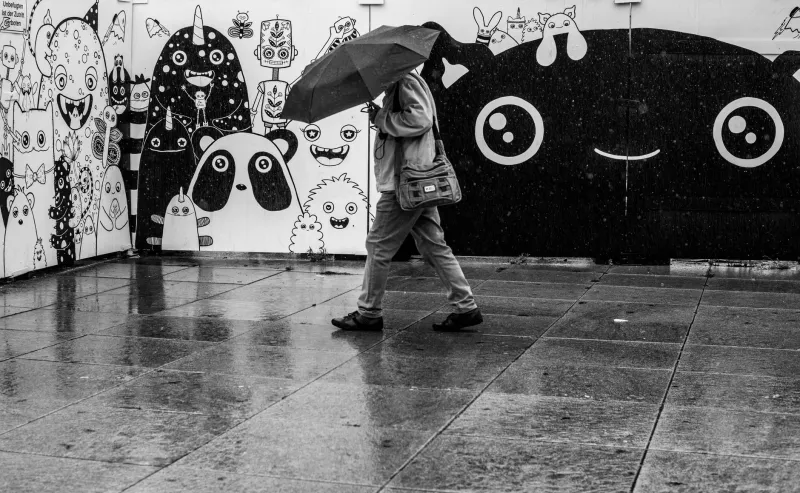
- The crowd scene extra doing something deeply specific. Not just "person walking" but "person walking while arguing with a pigeon." Specificity is the whole game.
- The sign that's clearly a joke for adults. Every animated show has at least one street sign, storefront, or magazine cover that was smuggled past the censors and lives rent-free in the minds of everyone who caught it a decade later.
- The recurring background character. The same mustachioed bystander appearing in fourteen unrelated episodes is not laziness — it's a self-portrait with plausible deniability.
- The prop with a whole backstory. A framed photo on a desk that's slightly too detailed to be generic. Somebody drew that photo. Somebody decided who was in it. That artist has thought about this family more than you've thought about your own.
- The newspaper headline. Editorial illustrators are the undisputed champions here — a single headline in a drawn newspaper can carry more satire than the entire accompanying article.
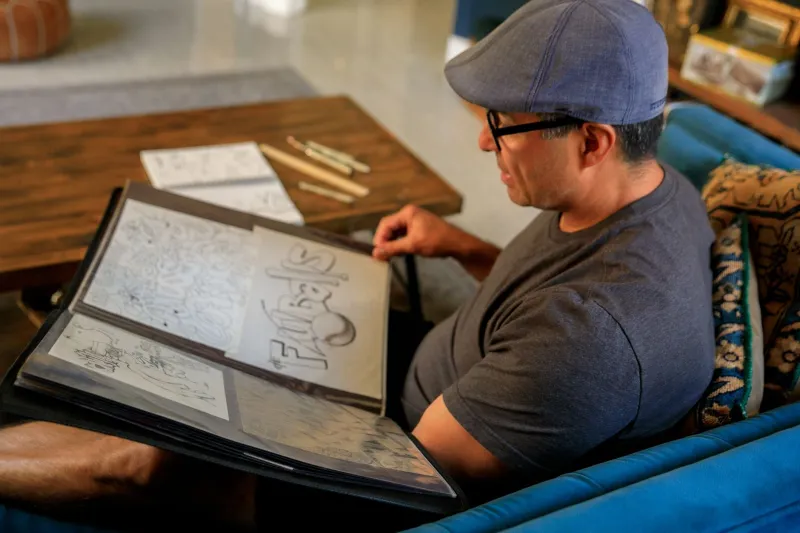
- The handwriting. Notes, graffiti, receipts, birthday cards. Hand-lettered text in a background is a tiny act of trust: the artist assuming you'll read it, and being right maybe one time in a thousand.
Why We Keep Doing It
There's a labor argument here — background details are unpaid overtime, essentially, and we've written before about the ten hours hiding inside a ten-minute doodle. But the deeper reason is simpler: illustration is a conversation, and background details are the whisper in the back of the room. Foreground art says what the story needs. Background art says what the artist needs.
And for the audience, finding one is a small treasure hunt with no prize except the feeling of being in on it. In an era of algorithmic sameness, a sandwich-holding man in the third row of a crowd scene is proof a human hand was here.
So to every illustrator sneering at their deadline while drawing a tiny "CLOSED FOR LUNCH" sign on a fictional shop: we see you. Well — one of us does. That's the point.
Long live the background characters. They deserve a union, a pension, and at minimum, a sandwich.