Six Seconds of Fame: Confessions From the Other Side of the Portfolio Scroll
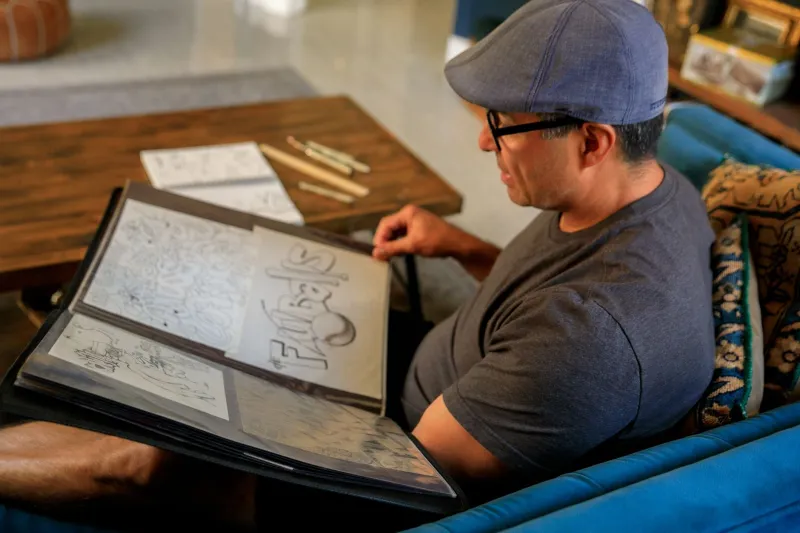
Here's a fun fact to ruin your afternoon: the average art director spends about six seconds on a portfolio before making a decision. Not six minutes. Six seconds. That's less time than it takes to microwave a burrito, and considerably less time than you spent on the shading of that left hand in image fourteen.
But before you spiral into an existential crisis with your Wacom, know this: six seconds is not a death sentence. It's a design brief. And unlike most briefs, this one comes with intel from the people doing the scrolling.
The Thumbnail Is the Audition
Ask any art director what makes them stop mid-scroll and you'll hear the same word over and over: stopping power. It's not a technical term. It's a gut reaction — that involuntary brake-tap of the thumb when something on screen has enough contrast, enough shape clarity, or enough weirdness to interrupt the muscle memory of scrolling.
One children's publishing art director we spoke with (who asked to remain anonymous so her freelance pool doesn't find out she reads portfolios on the toilet) put it bluntly: "If the thumbnail doesn't read, the full-size image never gets seen. I'm not zooming in to give you a fair shake. Nobody zooms in. Zooming is charity, and this is a business."
What creates stopping power? Surprisingly consistent answers:
- One clear focal point. Not seven. Not a whole town square. One thing the eye lands on like a plane on a runway.
- Value contrast you can read at postage-stamp size. If your image turns to gray soup when shrunk, it's soup.
- A mood you can name in one word. "Cozy." "Ominous." "Feral." If an art director has to work to name the feeling, they've already scrolled past.
The Third Image Rule (Yes, Really)
Here's the counterintuitive part: most art directors say the first image in your portfolio matters less than the third.
Why? Because the first image is expected to be good. It's your hero piece, your greatest hit, the one you've re-polished eleven times. Nobody's surprised by it. But by image three, the viewer is asking a different question: can this person do it again?
The third image is where consistency gets audited. It's where you prove the first one wasn't a fluke, a collab, or a very good month. Think of your portfolio like a heist crew — the first image is the charming con artist who gets you in the door, but the third image is the one who has to actually pick the lock.
A senior art director at a national magazine described her process like this: "First image, I go 'ooh.' Second image, I go 'okay.' Third image, I decide if I'm hiring you or closing the tab. The third image is where I check if they have a point of view or just a filter."
Sequencing Is Storytelling (Whether You Meant It or Not)
Every portfolio has a sequence, even the ones thrown together at 2 a.m. before a deadline. The order tells a story. The problem is that most artists never asked what story.
Random sequencing whispers things you don't mean to say. Leading with three fan art pieces says "I'm still finding my own voice." Burying your strongest work at image nineteen says "I don't know what my strongest work is." Ending on a weak piece says "I got tired," which, fair, but don't tell the jury.
The pros suggest thinking of your portfolio like a mixtape:
- Open with a banger — your most instantly readable, most you piece.
- Follow with range — show you can vary setting, mood, or subject without losing your hand.
- Put your third-strongest piece third. Not your ninth. Not a sketch. Third.
- End on something with a wink — a piece that makes the viewer curious what else is in the drawer.
And for the love of all things inkscape: cull ruthlessly. A portfolio of thirty images is a portfolio with no image. Every weak piece isn't neutral — it's actively diluting the six seconds. Your portfolio should be a highlight reel, not a documentary.
What Gets Them to Hit Delete
We also asked what makes art directors bounce, and the answers were brutally practical:
- Watermarks the size of a license plate. We get it. You're protective. But a giant diagonal "© DO NOT STEAL" across your hero piece is like putting shrink wrap on a first date.
- Portfolios that require a login, a password, and a blood sample. If the art director has to work harder than the client, everyone loses.
- Ten near-identical portraits. One great portrait is a skill. Ten is a photocopy.
- No contact info. You'd be amazed. You'd also be amazed how often it happens.
Six Seconds, Infinite Replays
The good news buried in all this: the six-second rule is actually generous. It means you don't need to be everything to everyone. You need one image that stops a thumb, two more that back it up, and a sequence that tells a story on purpose.
The art director scrolling at midnight, between client emails and a cold brew, isn't looking for perfection. They're looking for a reason to feel something in under ten seconds. Give them that, and your portfolio stops being a lottery ticket and starts being a handshake.
Now go look at your third image. We'll wait.