Coffee Rings and Confessions: What Happens in an Illustrator's Sketchbook Stays There (Until It Doesn't)
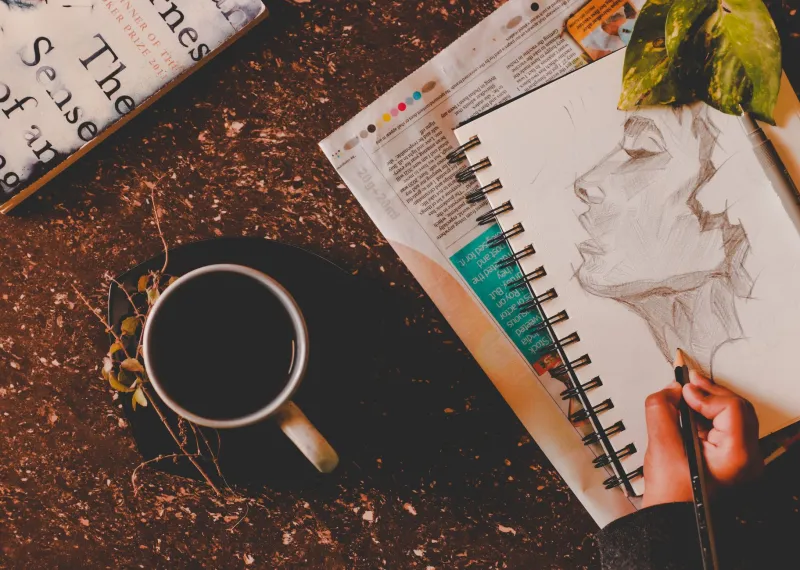
There's a moment at nearly every comic convention in America when a fan points at a battered, spiral-bound wreck of a notebook sitting next to the glossy prints and asks the forbidden question: Can I look inside?
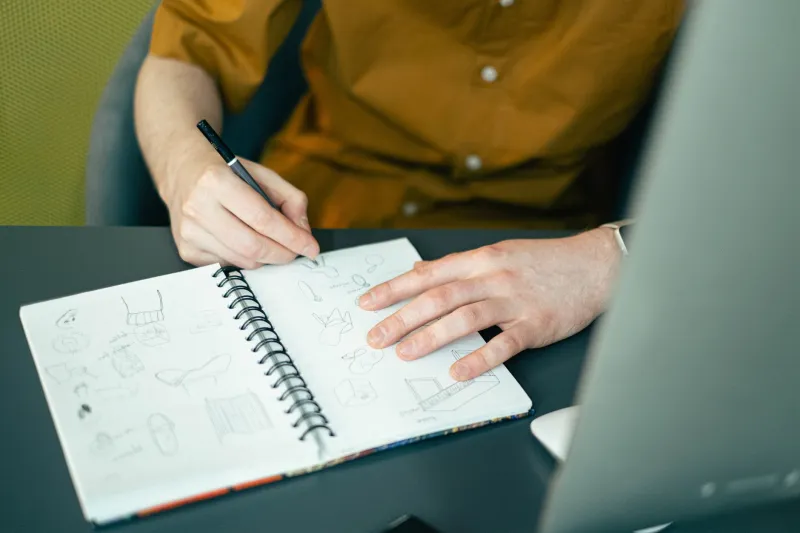
The illustrator's answer is almost always a laugh, a flinch, or a very polite no. Because the sketchbook — the real one, the one with the coffee rings and the torn corner — is not a product. It's a diary with a pencil.
The Pages That Were Never Meant for You
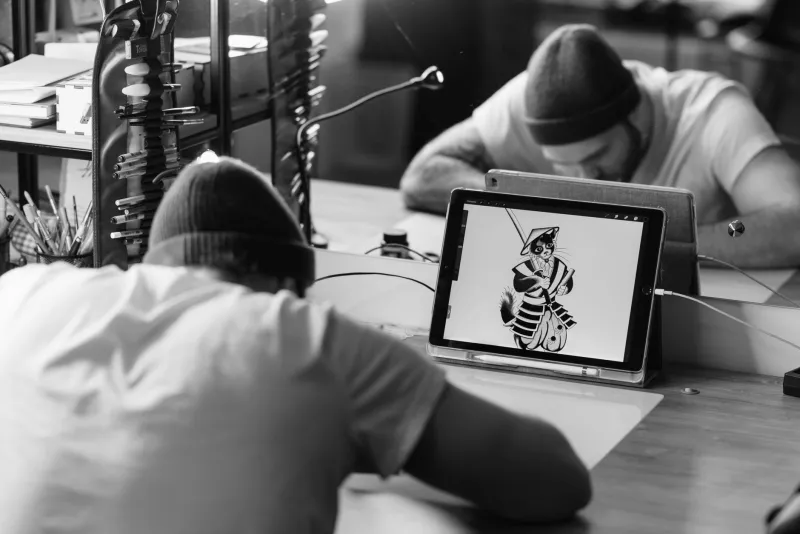
Ask any working illustrator what's in their current sketchbook and watch them get cagey. It's the one place in a professional artist's life with no art director, no client, no deadline attached.
Portland-based character designer Marisol Quan tells us her current notebook contains "three viable character concepts, a drawing of my neighbor's extremely judgmental cat, and a full page dedicated to hands that I still cannot draw." She's been illustrating commercially for eleven years. The hands thing, she says, is permanent.
That's the secret nobody advertises: sketchbooks aren't practice for the good work. Very often, they are the good work — just unguarded. Freed from the pressure to be portfolio-ready, artists doodle with their actual brains instead of their professional ones. The result is looser, weirder, and frequently more alive than anything that ends up framed.
Why Sketchbooks Get Stolen at Cons
It sounds like a joke, but illustrators genuinely guard these things like wallets. A handful of high-profile artists — many in the animation and children's publishing worlds — have had sketchbooks lifted straight off convention tables, sometimes to be resold, sometimes just by fans who wanted a piece of the artist's private brain.
The theft makes a twisted kind of sense. A finished print is a performance. A sketchbook page is a confession. Collectors know that the scribbled character with three crossed-out versions of the same nose tells you more about how an artist thinks than any polished hero shot ever could. You're not buying an image; you're buying access to a process.
Some artists have adapted by displaying "decoy" sketchbooks — carefully curated pages meant to be browsed — while the real one stays zipped in a bag under the table. If that sounds paranoid, consider that one Midwest illustrator we spoke to keeps a decoy notebook specifically because hers was photographed page-by-page and posted to a fan forum without permission in 2021. She now considers the real one "classified."
The Unfinished Page Problem
Here's where it gets interesting for the rest of us: the art world has started catching on that these private pages might be the most valuable documents an illustrator produces.
Museums and university archives increasingly court working illustrators for their sketchbooks, not just their finished pieces. The Morgan Library in New York has long championed artist sketchbooks as objects of study in their own right. Scholars can trace a character's evolution across dozens of half-abandoned attempts — and in those failures, they find the artist's actual voice: their humor, their obsessions, the shapes they return to when nobody's watching.
A finished illustration answers questions. A sketchbook page asks them. That's why a page with a single character drawn eleven times, each version slightly wrong, can feel more intimate than a gallery wall.
Start Your Own (Badly)
If you're a fan or a dabbler, the lesson from the professionals is refreshingly low-stakes: the sketchbook's power comes precisely from its lack of stakes. Nobody's grading it. Buy the cheap one. Use the pen that skips. Let the grocery list live next to the dragon.
And if you ever find yourself at a table at Emerald City Comic Con or MoCCA Fest, eyeing an artist's battered notebook with longing — ask nicely, and accept the no with grace. Some diaries have a pencil instead of a lock. They're still diaries.