The Ten Hours Behind That 'Ten-Minute Doodle': Hiding the Labor in Effortless-Looking Art
There's a compliment I receive on a semi-regular basis that I've learned to accept with a smile and a clenched jaw: "It looks so effortless!"
Friends, I once spent eleven hours on a piece that a client described as "a quick little sketch, right?" It was not a quick little sketch. It was eleven hours of thumbnailing, erasing, repainting, and one small desk-based emotional crisis. But it looked tossed off, and that was the entire point.
The Great Paradox of Spontaneity
Here's the thing nobody tells you when you're studying illustration: the drawings that read as loose, breezy, and alive are almost always the most engineered things on the page. Spontaneity, in professional editorial art, is a special effect. It's a haunted house — carefully constructed to feel accidental.
Art directors want "effortless" for a very good reason. A drawing that looks labored makes the reader feel the labor. A drawing that looks easy lets the idea land first, the personality second, and the craft... quietly, underneath, like a good bassline. Nobody hums the bassline. Everybody notices when it's gone.
Trick One: Decide Everything Before You Draw Anything
The single biggest difference between a sketch that looks confident and one that looks stiff is the amount of thinking that happened before the pencil touched down.
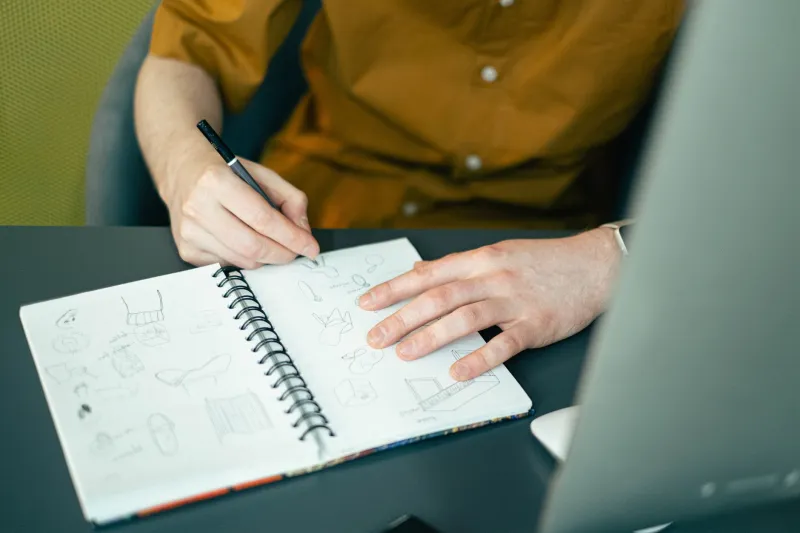
I thumbnail like a person possessed — tiny, ugly, fast scribbles that no one will ever see. By the time I start the "real" drawing, every major decision is made: where the weight sits, which way the character leans, where the eye goes first. What looks like improvisation on the final piece is actually just me not hesitating, because hesitation is already over.
Confidence reads as ease. That's the whole magic trick.
Trick Two: Keep the Mess in the Right Places
Effortless-looking work isn't clean — it's selectively messy. The trick is knowing where looseness helps and where it hurts:
- Faces and hands: controlled. Always. One wobbly eye reads as a mistake, not as charm.
- Clothing, hair, backgrounds: loose. Let lines overshoot, let shapes stay wonky, let paint bleed a little.
- The focal point: tightest thing on the page.
- Everything else: progressively lazier.
That gradient of finish is what makes a piece feel human. A drawing that's equally rendered everywhere looks like a machine made it. A drawing that gets scruffier toward the edges looks like a person who cared — but not too much.
Trick Three: Draw It Once, Then Draw It Again, Badly on Purpose
Here's a slightly unhinged exercise I do on editorial pieces: I finish the drawing, then I redraw it looser on a fresh layer, using the finished version as reference but at double speed. The fast redraw almost always has better rhythm — the gestures get bouncier, the shapes simpler, the whole thing more alive.
Then I steal the best of both. The polished version gives me structure; the fast version gives me its reckless energy. The final piece is a Frankenstein of discipline and chaos, and nobody can tell which parent it came from.
A Before-and-After, Confessed
For a recent editorial piece about remote work burnout (a topic that requires zero imagination to illustrate, honestly), my first pass was a person at a laptop with a wilting plant. Technically fine. Dead on arrival.
The final version: the same person, but the laptop had grown little legs and was walking away from them. Same three-hour render time. But I spent an extra ninety minutes on thumbnails and gesture passes so the pose could be that specific slouch — spine curved like a question mark, one sock falling off — that made readers say "ha, it's me."
The "effortless" part wasn't the rendering. It was the idea arriving so cleanly that the labor became invisible.
Fake It Till the Deadline Makes It
If you take one thing from this: art directors aren't asking for less work when they ask for effortless. They're asking for work that hides its effort — a drawing where the seams don't show and the thinking feels like breathing.
So thumbnail obsessively. Redraw fast on purpose. Keep your mess where it flatters you. And when someone says "wow, that looks so easy," smile, say thank you, and go lie down. You've earned it.