Somebody Fixed Your Painting While You Slept: Inside the Wildly Polite Crime of the Fan Redraw
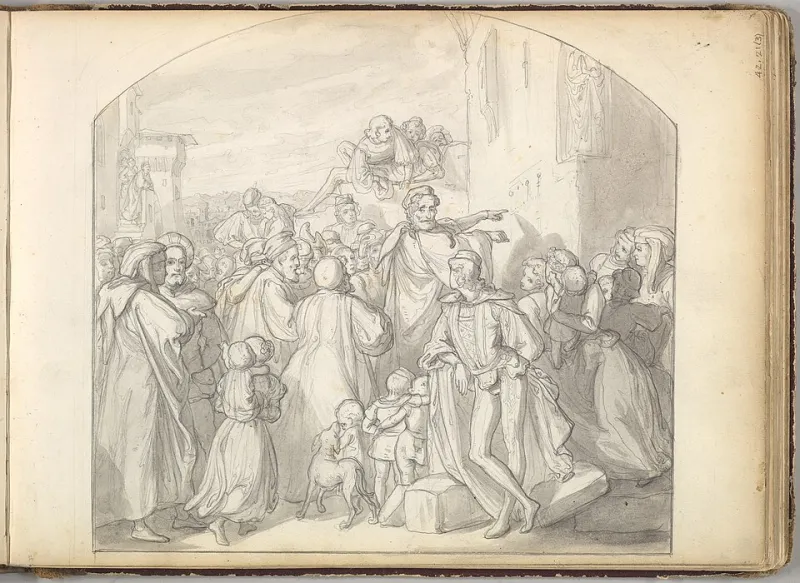
Photo: Frederic Leighton, CC0, via Wikimedia Commons
There is a particular flavor of heartburn that arrives via push notification: a fellow artist tagging you on a post where someone has redrawn your illustration. Same composition. Same color story. But the hands are fixed. The proportions are fixed. The face, apparently, was a cry for help — and a stranger answered.
Welcome to the unsolicited redraw, the internet's longest-running tradition of complimenting art by improving it. Nobody asks for it. Everybody has an opinion about it. And somewhere between anime correction posts and the annual wave of redesigns that follow every major magazine cover, it has become one of the strangest rituals in American art culture.
The Genealogy of the 'Fix'
The redraw has lineage. Anime fandoms have been correcting frames since forums had signatures. The New Yorker cover gets reworked on Instagram within hours of publication, usually by someone who has never been edited by a fact-checker, let alone an art director. And every few months, a viral thread emerges where artists redraw each other's childhood drawings — a wholesome cousin of the genre that proves the impulse isn't inherently mean. It's just rarely invited.
The modern version comes with a caption structure so consistent it might as well be a legal template: "I fixed it" or "drew this in my style" over someone else's piece. The subtext, delivered with a smiley face, is always the same: I could have done this better, and luckily for everyone, I did.
When It Happens to You
"The first time, I stared at my phone for a full minute," says a children's book illustrator in Ohio who, like most of the artists we spoke to, asked to stay anonymous — because the redraw economy runs on politeness, and nobody wants to be the villain of a quote-tweet. "They'd given my character better hands. Which, fair. But they'd also given her a whole different face, a different energy. It wasn't my character anymore. It was a stranger wearing my character's outfit."
Another editorial illustrator described a more surreal experience: someone redrew her national magazine cover with photorealistic rendering, posted it to r/Art, and the top comment read, "This is what the original should have looked like." The original had been approved by four editors and hung in a gallery. The redraw had been made in Clip Studio Paint on a lunch break.
"The bizarre part," she says, "is that I understood the impulse. I've done it. We've all done it. You see a piece and your hand itches. The difference is I do it in my sketchbook, where it dies with dignity."
The Accidental Flattery Problem
Here's the uncomfortable truth most redrawers haven't considered: fixing someone's art is a form of close reading. You cannot correct a drawing without studying it — the anatomy, the brush economy, the choices. In a backwards way, the redraw is the most labor-intensive compliment on the internet.
Several illustrators admitted the redraws taught them something. "Someone fixed my perspective and they were right," one character designer confessed. "I hated it. I screenshotted it. I still use their correction."
The Etiquette Nobody Wrote Down
So where's the line? Working artists offered a rough consensus:
- Redrawing your own work in someone's style: fine. That's study, and it's how everyone learns.
- Posting a 'fixed' version of someone's finished piece: ask first. The answer is usually no, but the asking is what matters.
- Redesigns of published covers for critique: fair game. Editorial art is public discourse; responding to it visually is legitimate commentary.
- "Fixed it" captions: retire them. Forever. Take the L on the caption and let the drawing speak.
The real issue is rarely the drawing. It's the framing. A redraw presented as conversation says, I love this piece so much I made one too. A redraw presented as correction says, I love this piece so much I made a better one, please clap.
What It Says About Us
Zoom out and the redraw impulse starts to look less like ego and more like hunger. Americans are raised on participation — fantasy leagues, karaoke, comment sections. Art used to be the one field where the barrier to entry was ten thousand hours. Now the tools are free, the tutorials are infinite, and the distance between admiring a piece and reworking it is one app download.
That's not entirely bad. The redraw culture means people are looking closely at illustration — closely enough to have opinions about hands. An audience that fixes your art is an audience that noticed it.
The illustrators we spoke to mostly landed in the same place: a sigh, a screenshot, a grudging lesson learned, and a quiet promise to draw better hands. Because in the end, the only redraw that actually matters is the one you do to yourself — and unlike the internet's version, that one comes with no caption at all.