The Floor Plan Is a Confession: What Animated Homes Reveal About the People Who Live in Them
Here's a fun party trick for your next animation-nerd gathering: pause any beloved cartoon on a wide shot of the home, and ask everyone what the house says about the family. You will be amazed how much they already know, even if they've never drawn a background in their lives. Because background designers are doing something sneaky. They're writing character studies in architecture.
Let's tour the classics and see what the real estate is really saying.
The Impossible Apartment: Luxury via Square Footage Fraud
You know the one. A Manhattan-adjacent apartment where a family of modest income occupies roughly 2,000 square feet of sun-drenched open plan, complete with a bay window overlooking something scenic. The rent-controlled physics of this space have been debated for decades, and the answer is simple: the apartment isn't a building, it's a mood.
Designers give characters generous space for two reasons. First, staging—comedy and ensemble scenes need room for bodies to move without overlapping. Second, aspiration. A spacious, warm apartment tells the audience these characters are comfortable, that their world is safe enough to be roomy. Shrink the space, and the whole emotional temperature drops. Nobody wants to watch a lonely single-panel comic in a studio apartment with a hot plate. Actually—some of us do. But that's a different genre.
The Treehouse in the Woods: Freedom, With a Rail
The rural or semi-rural hideaway—treehouse, barn, converted cabin—is animation's favorite symbol of childhood autonomy. The message encoded in every rope ladder and rope swing is: here, kids govern. Adults exist, but they're atmospheric, like weather.
The craft trick is the rail. Great designers never build pure freedom; they build freedom framed by safety. The treehouse has walls. The woods have a path home. Take that framing away and the setting stops feeling adventurous and starts feeling negligent. If you're designing a kid's-world environment, ask yourself where the invisible fence is. Audiences feel its absence even if they can't name it.
The Storybook Cottage: Architecture That Hugs
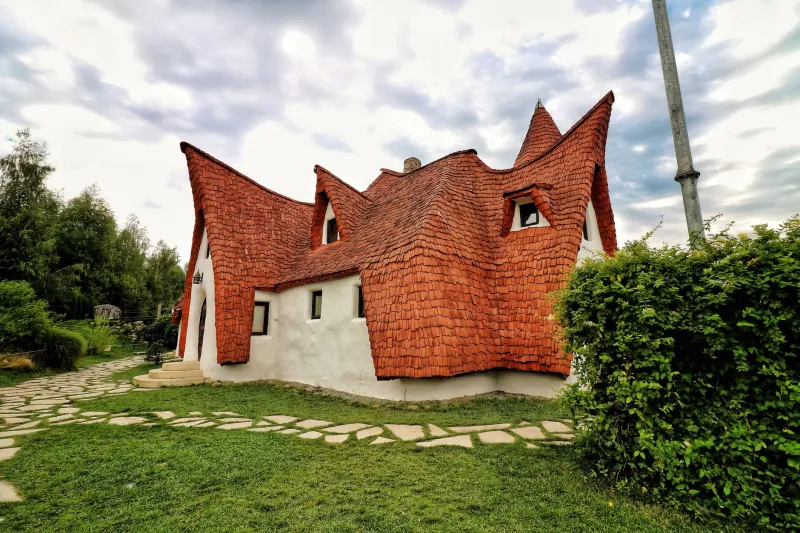
Cottages in animation obey a rulebook nobody wrote down but everyone follows: rounded edges, a slightly crooked roofline, a chimney doing visible work, and a garden that suggests someone loves this place. The crookedness is the point. Perfect symmetry reads as institutional; a sagging porch beam reads as loved.
This is where the whimsy lives, and it's the single most transferable lesson for illustrators: imperfection signals warmth. A lopsided window says a person built this, not a zoning board. Lean into the wobble.
The Suburban Split-Level: Normalcy as a Punchline Setup
The suburban home in American animation is a stage built specifically for chaos. Its immaculate living rooms, its identical windows, its lawn—all that order exists to be disrupted. The design contract is: this house promises normal, and the show will now break that promise weekly.
Notice how the interiors are usually drawn a touch more cramped and cluttered than the exteriors suggest. That's not laziness; it's commentary. The outside says "keep up with the Joneses." The inside says "the Joneses have no idea."
Takeaways for Your Own Worlds
So what do you do with all this? A few practical rules of thumb:
- Design the home from the character's insecurities outward. A character who craves control gets tidy geometry. A chaotic one gets clutter with a system only they understand.
- Use one architectural lie per setting. The impossible apartment, the cottage that's bigger inside—one magic rule makes a world feel alive. Five magic rules make it feel broken.
- Let the background age. Scuffs on the doorframe, a patched fence, height marks on a wall. Lived-in environments tell the audience this story started before the first frame.
- Stage the emotional geometry. Where does the character sit when they're sad? Give them that corner. Recurring emotional geography builds subconscious attachment faster than any dialogue can.
The houses we grew up watching were never just backdrops. They were the first architecture criticism any of us ever received, delivered in Saturday-morthand doses. Design accordingly—and maybe give your characters a slightly crooked chimney. They've earned it.