Round Three Is Where Trust Goes to Die: Surviving the Revision Treadmill
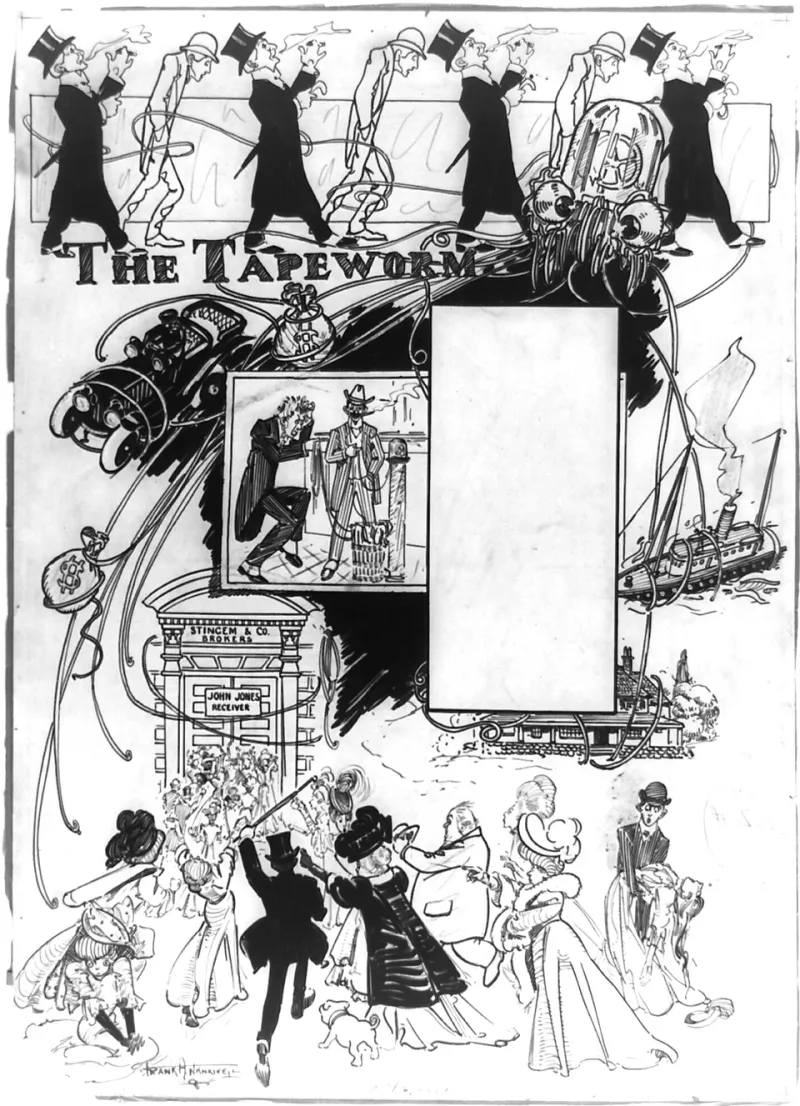
Photo: Frank Arthur Nankivell, Public domain, via Wikimedia Commons
There is a moment, familiar to every working illustrator in America, when the inbox chimes and you know — before you open it — that this is the email. Not the first round of notes, which are usually reasonable. Not the second, which is often just the client's boss finally looking at the file. The third one. The one that says, in some dialect or another: we don't know what we want, but this isn't it.
Welcome to the revision treadmill. The belt is moving. You are walking. And somewhere around mile three, the whimsy you were hired to supply starts leaking out of you like air from a slow-puncture tire.
The Anatomy of a Revision Spiral
Here's how the classic spiral unfolds. Round one: the client sends cheerful, actionable notes. "Can the fox be holding a lantern? Love the lantern idea!" You oblige. You're a professional. You even enjoy it a little.
Round two: the notes get quieter and stranger. "The lantern feels a bit... literal?" You change the lantern to a firefly. You bill the hours. You tell your spouse it's fine.
Round three: the notes stop referencing the illustration at all. "We're just not getting the wow factor. Can it feel more special?" Congratulations — you have officially left the land of actionable feedback and entered the vibe economy, where the currency is adjectives and the exchange rate is your sanity.
Why round three specifically? Because by then, the client has shown the work to everyone in the office with a pulse, each person has projected their personal taste onto your fox-with-a-firefly, and the original brief — the thing you actually delivered on — has been dead for a week. Round three isn't feedback. It's grief. The client is mourning the illustration they imagined before they hired anyone, and no amount of lanterns can resurrect it.
A Field Taxonomy of Revision Archetypes
After years of fieldwork (and field complaints), we've identified the major species you'll encounter on the treadmill:
The Vibe-Shifter. Communicates exclusively in weather metaphors. "Make it warmer but not cozy." "Can it feel more like a Tuesday?" Useful response: ask them to send three reference images. Reference images are the Rosetta Stone of the vibe economy.
The Competitor Curator. Sends you another artist's work — sometimes a direct rival's — captioned "inspiration!" What they mean is "this, but legally distinct." What you hear is "I wish I had hired them." Do not take the bait. Do not redraw someone else's piece with the serial numbers filed off. Do say: "Happy to explore that direction — here's how I'd interpret it in the style you hired me for."
The Committee Amalgam. Their notes read like five different people wrote them, because five different people did. One wants the character smaller. One wants the character bigger. One just wrote "thoughts?" and went to lunch. Your job is to identify which committee member signs the checks and please only that one.
The Nostalgia Bomb. "Can it feel more like the art from that book I had growing up?" They cannot name the book. They can only describe the smell of the Scholastic book fair. Sometimes, if you're lucky, they mean it in a flattering way. Sometimes they mean Thomas Kinkade. It's a coin flip every time.
The Last-Minute Larry. Goes silent for two weeks, then returns at 4:47 PM on a Friday requesting a full restructure before Monday's board meeting. Larry has never once looked at a work-in-progress file. Larry only reviews finals. Larry is why contracts exist.
How Veterans Cap the Treadmill
The pros don't avoid revisions — that's impossible, and honestly, a round or two makes the work better. What they do is build a fence around round three before the project even starts.
Put the number in the contract. "Includes two rounds of revisions; additional rounds billed at the standard hourly rate." This isn't hostile. It's a map. Clients respect a map.
Get sign-off in writing at every milestone. "Approved — moving to final color!" is a beautiful sentence. It creates a paper trail that gently reminds everyone that changing the fox's species in round four is a new project.
Charge for the vibe. When feedback becomes purely subjective — the "more special" territory — the veteran move is to smile, quote a new round of fees, and frame it as "exploring a new creative direction." Direction changes are new work. New work is billable. This sentence has saved more freelance careers than any art degree.
Know when the third round is your fault. Sometimes. It happens. If you ignored the brief, or the palette genuinely missed, eat the fix and do it fast. The illustrators who last aren't the ones who never revise — they're the ones who can tell the difference between a client's anxiety and an actual problem.
The Whimsy Comes Back
Here's the secret nobody tells you on the treadmill: the client who wanted "more whimsy" wasn't lying. They just didn't have the vocabulary to ask for what they already saw in your portfolio when they hired you. Somewhere under the committee notes and the competitor screenshots is the person who picked you — the lopsided fox, the weird lantern, the whole glorious sensibility.
Your job in round three isn't to draw harder. It's to walk the client back to the moment they said "yes." Send the original sketch. Quote their own brief back to them. Remind them why they called.
And then, if all else fails, invoice for round four. Nothing restores a client's artistic vision quite like a line item.